Logo
  • Find Sales Partner
  • Shop
    • eStore
    • Fanshop
  • Shop
    • Wacker Neuson spare parts on Wacker Neuson construction machine, Wacker Neuson advisor, customer and construction machines in background.
      eStore
      The shop for original Wacker Neuson spare parts
    • Yellow sunglasses with Wacker Neuson logo.
      Fanshop
      Must-haves for true Wacker Neuson fans
  • Contact
  • Worldwide
  • Career
  • Select language EN
    English Deutsch
  • Products
    • Overview Products
    • Concrete Technology
    • Vibratory Rammers
    • Vibratory Plates
    • Rollers
    • Excavators
    • Wheel Loaders
    • Telehandlers
    • Dumpers
    • Mini Loaders
    • Demolition
    • Power Supply
    • Lighting
    • Pumps
  • zero emission
    • Overview zero emission
    • Electric Internal Vibrators
    • Electric trowels
    • Electric Rammers
    • Electric Vibratory Plates
    • Electric Rollers
    • Electric Excavators
    • Electric Wheel Loaders
    • Electric Telehandlers
    • Electric Dumpers
    • Power Storage
    • Energy cost savings
    • BatteryOne
  • Rental
    • Overview Rental
    • Rental Stations
  • Used machines
  • Services & Parts
    • Overview Services & Parts
    • Repair & Maintenance
    • Spare Parts
    • Financial Solutions
    • Telematics
    • Consulting Concrete Consolidation
  • About us
    • Overview About us
    • History
    • Our locations in Austria
    • Production sites
    • Trade fairs and events
    • News
    • Insights
    • Promotions
    • Career
    • Downloads
    • Contact
  • Search
Back to overview
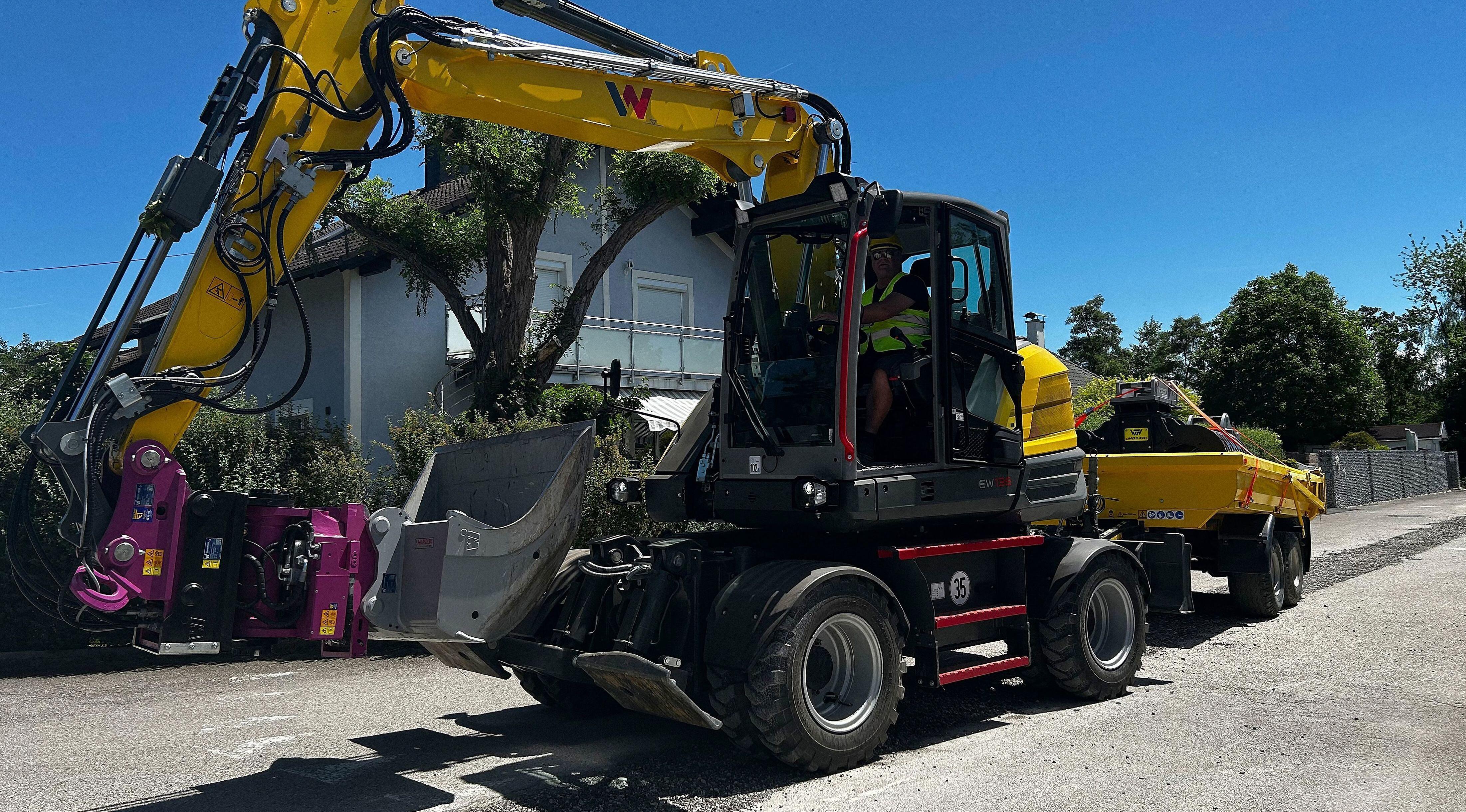
excavator EW135 on street with Trailer
Share
  1. Home - AT
  2. ...
  3. Insights
  4. Who is allowed to drive a wheeled excavator?

Who is allowed to drive a wheeled excavator? An overview of driver’s licenses, driving on public roads, and mobility

Wheeled excavators are versatile machines on efficient construction sites. Consequently, construction companies, machine operators, and fleet managers often ask questions such as: Who is allowed to drive a wheeled excavator? What type of driver’s license is required to operate a wheeled excavator? Is it permitted to drive a wheeled excavator on public roads? And how fast does a wheeled excavator actually go?

The answers depend on the respective national regulations. As a general rule, anyone who wants to operate a wheeled excavator or drive it on public roads must meet the legal requirements applicable in the country of operation. This may include appropriate driver’s licenses or proof of qualification.

For construction companies, however, the legal aspects aren’t the only deciding factors. Equally important is how efficiently a machine can be moved between job sites and how it contributes to productive construction site operations.
Who is allowed to drive a wheeled excavator?

The requirements for driving and operating a wheeled excavator vary depending on the country, area of use, and machine.

Typically, operators must:

  • Have received appropriate instruction or training
  • Possess the necessary qualifications
  • Hold a valid driver’s license, if required, when moving the machine on public roads

Since legal regulations may vary, companies should always check national regulations.

Anyone operating a wheeled excavator must have received the instruction, training, and, if applicable, qualifications required by applicable national regulations. Depending on the country, type of operation, and work environment, additional requirements or documentation may be mandated.

What driver’s license is required to operate a wheeled excavator?

The required driver’s license depends, among other things, on the following factors:

  • Type of machine registration
  • Vehicle classification
  • Gross vehicle weight
  • Maximum speed
  • Use on public roads or exclusively on construction sites
  • Possible use with a trailer
  • National legislation

Anyone wishing to operate a wheeled excavator on public roads should familiarize themselves with the applicable regulations in the respective country beforehand.

Is it permitted to drive a wheeled excavator on public roads?

Many high-performance wheeled excavators are designed to travel autonomously between job sites.

Whether use on public roads is permitted depends on the respective national regulations as well as the machine’s registration and equipment.

For construction companies, this mobility offers significant advantages. Machines do not necessarily have to be transported for every change of location and can be flexibly deployed across multiple construction sites.

How fast does a wheeled excavator travel?

The travel speed of a wheeled excavator varies depending on the model. While smaller machines are often designed for short distances on the job site, high-performance wheeled excavators can reach significantly higher speeds to move efficiently between job sites.

This can simplify logistics and reduce downtime, especially for projects with multiple job sites located close together. For example, the EW135 wheeled excavator from Wacker Neuson can travel at speeds of up to 35 km/h; the EW100 wheeled excavator can even reach up to 40 km/h.


Why mobility is becoming increasingly important on efficient construction sites

Construction companies are facing increasing time and cost pressures. As a result, the demands placed on machines today go far beyond mere digging and loading performance. Wheeled excavators offer clear advantages here. Thanks to their on-road mobility, they can move between job sites without relying on additional transport vehicles.

Real-world example: The EW135 wheeled excavator

One example of the requirements for efficient job sites is the EW135 wheeled excavator from Wacker Neuson. The machine combines high mobility with powerful digging performance and helps construction companies deploy equipment, personnel, and materials more cost-effectively.

With a travel speed of up to 35 km/h, the EW135 is particularly well-suited for companies that regularly move between multiple job sites. This reduces transportation costs and increases the machine’s utilization rate.

When equipped appropriately, the EW135 can tow a trailer. This allows tools, attachments, or other materials to be transported directly between job sites.

For construction companies, this results in additional economic benefits:

  • Fewer transport trips
  • Reduced organizational effort
  • Greater flexibility in day-to-day operations
  • Faster response to last-minute changes in assignments

Performance specifications of the EW135 wheeled excavator

  • Operating weight: up to 16 metric tons, depending on configuration
  • Rated power: 100 kW
  • Displacement: 3,621 cm³
  • Travel speed: up to 35 km/h
  • Maximum digging depth: up to 4,732 mm

FAQ: Frequently Asked Questions About Wheeled excavators

Who is allowed to operate a wheeled excavator?
Requirements vary by country and area of operation. Generally, appropriate qualifications and, if applicable, a driver’s license are required.

What kind of driver’s license do I need to operate a wheeled excavator?
That depends on national legislation, the machine’s registration status, and its intended use.

Can a wheeled excavator be driven on public roads?
Depending on the machine’s registration status and applicable regulations, this may be possible.

How fast does a wheeled excavator travel?
Travel speeds vary depending on the model. The EW135 from Wacker Neuson reaches up to 35 km/h, while the EW100 can even reach up to 40 km/h. These wheeled excavators thus enable efficient movement between job sites.

Can a wheeled excavator tow a trailer?
Yes, certain wheeled excavators can tow trailers and perform additional transport tasks—for example, the EW135 wheeled excavator from Wacker Neuson.

What advantages does a wheeled excavator offer over a crawler excavator?
Some wheeled excavators can move between job sites on their own and therefore often do not require additional transportation for short distances.

For which applications is the EW135 suitable?
The EW135 is particularly well-suited for infrastructure projects, municipal applications, road construction, civil engineering, and construction sites with frequently changing job locations.

Do you have questions?

Contact us!

Maybe also interesting?

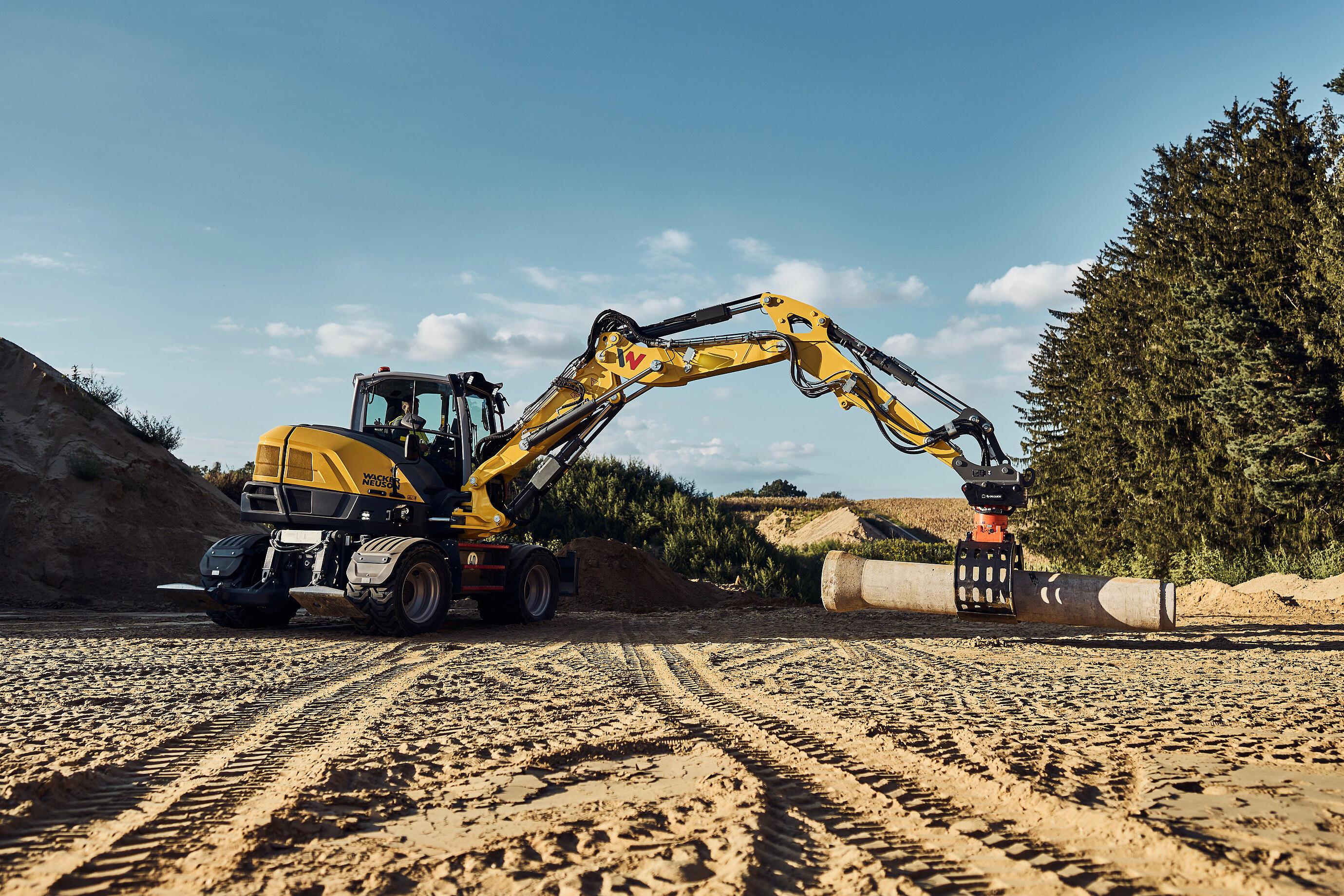
excavator in action
EW100: High-performance wheeled excavators up to 10 tons
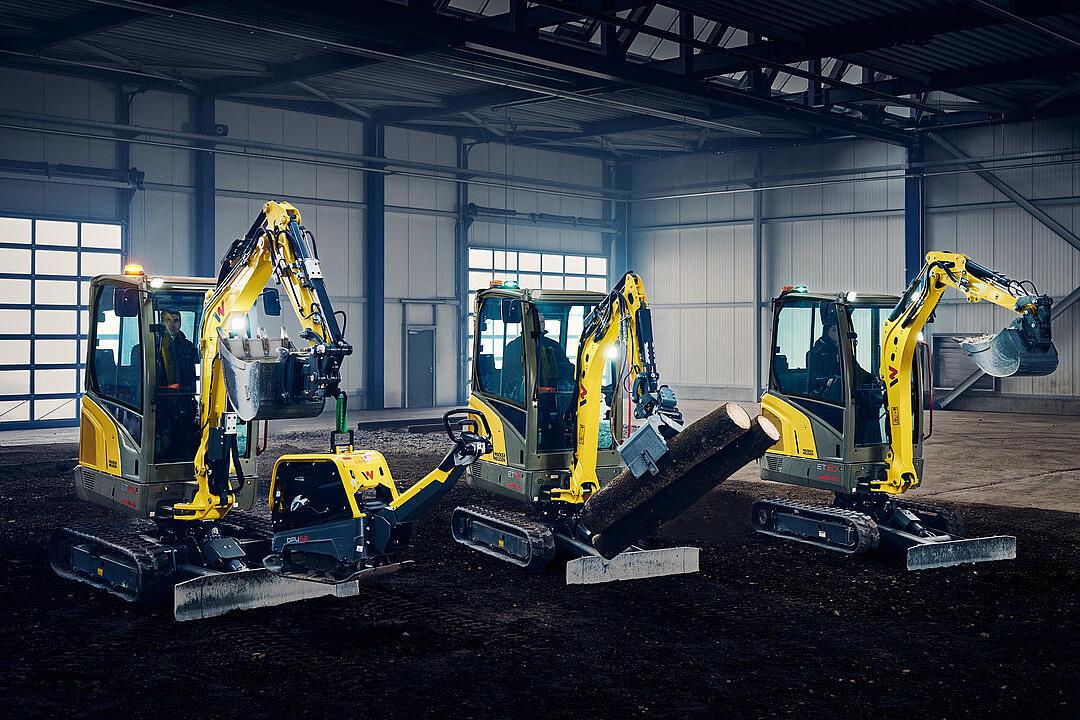
mini excavators in a row in industry hall
How many kilograms can a mini-excavator lift?
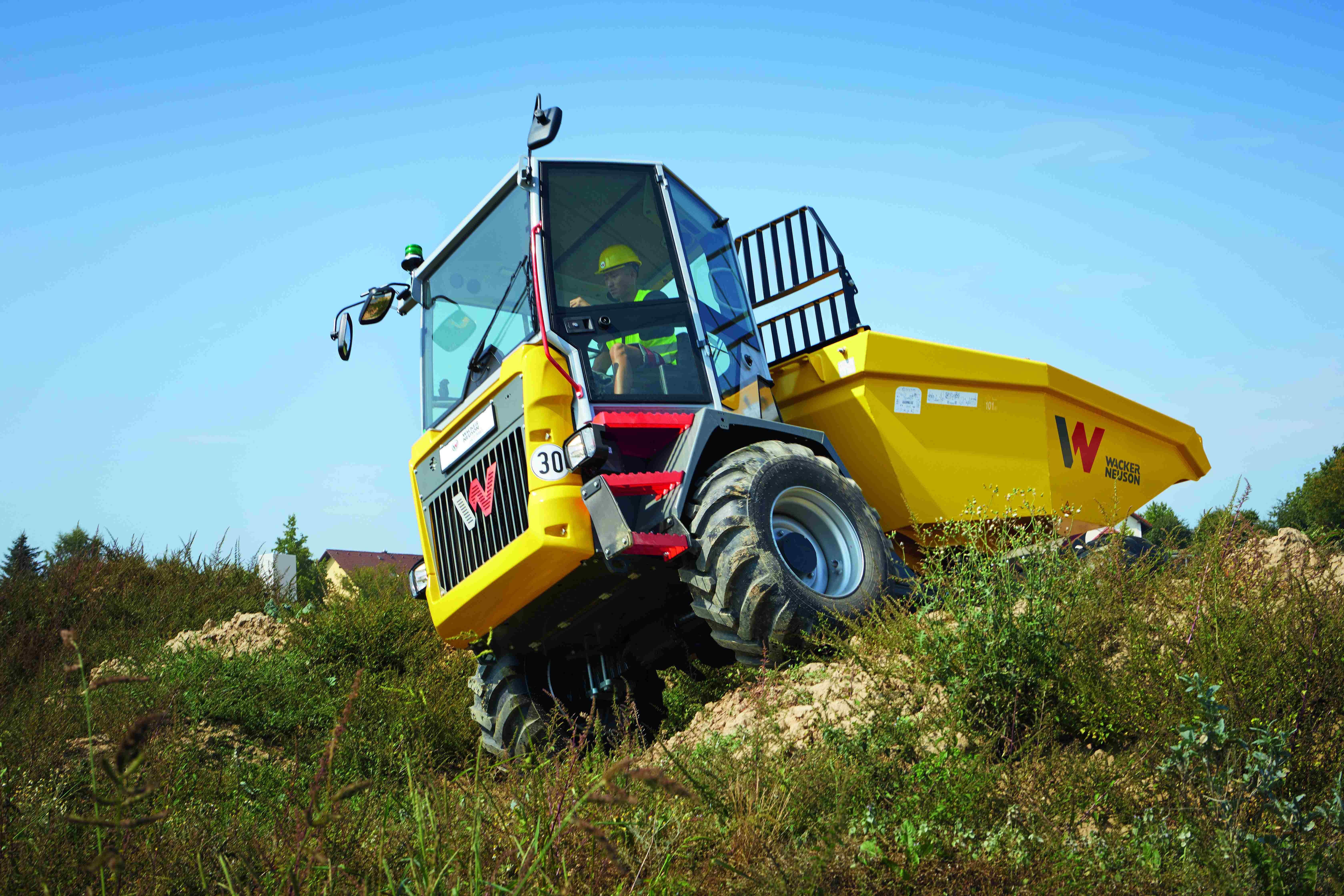
Wacker Neuson dumper driving on uneven terrain with operator in cab during construction work
Dumper safety - overview of innovative solutions from Wacker Neuson
Contact Contact

Contact

Fill out the contact form Fill out the contact form

Find a Dealer Find a Dealer

  • Login
  • Worldwide
  • Wacker Neuson Group
  • Insights
    • Login
    • Worldwide
    • Wacker Neuson Group
    • Insights

Contact 

info-at@wackerneuson.com

Contact Form

Social Media

Logo
  • Imprint
  • Privacy Statement
  • Terms of Use
  • Recycling Instructions
  • Cyber Resilience Act
© 2022 - 2026 Wacker Neuson SE
Go to top